
PCB RESEARCH & DEVELOPMENT SERVICES
Engineering-led R&D support for new materials, advanced PCB stack-ups, and novel board constructions, supporting full New Product Introduction (NPI) from initial requirements through to qualification and UL certification.
ENGINEERING-LED PCB R&D AND MATERIALS DEVELOPMENT
Exception PCB provides a dedicated PCB research and development service with a long history of supporting customers in developing new materials, board structures, and stack-ups that push the boundaries of standard manufacture.
Our dedicated R&D manager and engineering team bring deep expertise in materials science and application development. We approach every project with the same mindset: if something has not been done before, that is a challenge to solve through testing, development, and qualification. From initial requirements through to production-ready qualification and UL testing, we provide a structured and managed route to the builds your programme demands.
LET OUR R&D TEAM ASSESS YOUR REQUIREMENTS
Whether you are exploring a new material, working with an unfamiliar stack-up, or looking for a structured route to qualification, our engineering team can assess your requirements and recommend a clear starting point.
OUR R&D AND NPI PROCESS
STRUCTURED TO SUIT YOUR PROGRAMME
R&D programmes vary considerably in scope, complexity, and stage of development. Exception PCB structures each engagement to match the customer's situation rather than applying a fixed service model.
For customers earlier in the process, our DFM review service provides a useful first checkpoint before committing to a full development programme.
MATERIALS ASSESSMENT
For customers who have a defined application and want to understand which materials can support it, we carry out a focused assessment. We review the market, evaluate candidate materials, and return a shortlist with recommendations. This can be completed as a standalone engagement before any commitment to a broader programme.
FULL NPI PROGRAMME
Where the goal is to take a novel material or construction all the way to production readiness, we manage the full New Product Introduction (NPI) process. This covers requirements capture, materials assessment, process development, pilot builds, qualification, and UL testing where required. We own the milestones and documentation so the customer has a single point of contact throughout.
COLLABORATIVE R&D
For programmes involving external partners such as material suppliers, certification laboratories, or OEM stakeholders, Exception can act as technical lead or integrated project partner. We maintain alignment across the programme, manage risks, and ensure that each partner's work feeds into the overall development timeline without gaps or duplication
R&D IN PRACTICE
Committing to a novel material or untested stack-up without structured development is one of the most significant sources of programme risk in advanced PCB manufacturing. Problems that surface during production, such as process instability, certification failure, or yield issues, cost far more to resolve than those identified during the R&D phase.
Exception PCB's role is to give customers a structured and evidence-based route through that uncertainty.
CUSTOMERS WORKING WITH OUR R&D TEAM TYPICALLY BENEFIT FROM:
- A clear, documented pathway from requirements to production-ready qualification
- Reduced programme risk from material incompatibility or process instability
- Greater confidence entering the UL testing phase, with test plans aligned upfront
- A structured evidence base to support internal approvals and supply chain decisions
- Direct access to our engineering team throughout the programme, not just at handover
ADVANCED PCB MATERIALS WE SUPPORT
Exception PCB's R&D team works across a broad range of material types and construction approaches. Our starting position is always the same: if the physics supports it and a manufacturing route can be developed, we will find it.
DEVELOPMENT PROGRAMMES WE REGULARLY SUPPORT INCLUDE:
- New and emerging laminate materials requiring process development and qualification before production can begin
- Advanced multilayer stack-ups with tight dimensional, thermal, or electrical tolerances that standard materials cannot meet
- Hybrid constructions combining different material systems across the build sequence, where layer-to-layer compatibility must be confirmed
- High-frequency and RF-compatible materials where electrical performance must be validated through measurement and testing
- Constructions for regulated or safety-critical applications where UL or equivalent certification is required before market entry
READY TO DISCUSS YOUR R&D REQUIREMENTS?
Whether you are at concept stage or already in development, our R&D team can assess your requirements and recommend a programme structure that fits.
RELATED PCB SERVICES

UK PCB Manufacturing
Exception PCB manufactures complex printed circuit boards from our 58,000 sq. ft. facility in Tewkesbury. Engineering-led process control, full traceability, and UK supply-chain resilience for regulated and performance-critical sectors
PCB Prototyping
Engineering-led PCB prototyping from our UK facility, supporting design validation, NPI, and low-volume manufacture for complex and high-technology applications. Every prototype is built to production-intent standards, reducing programme risk.
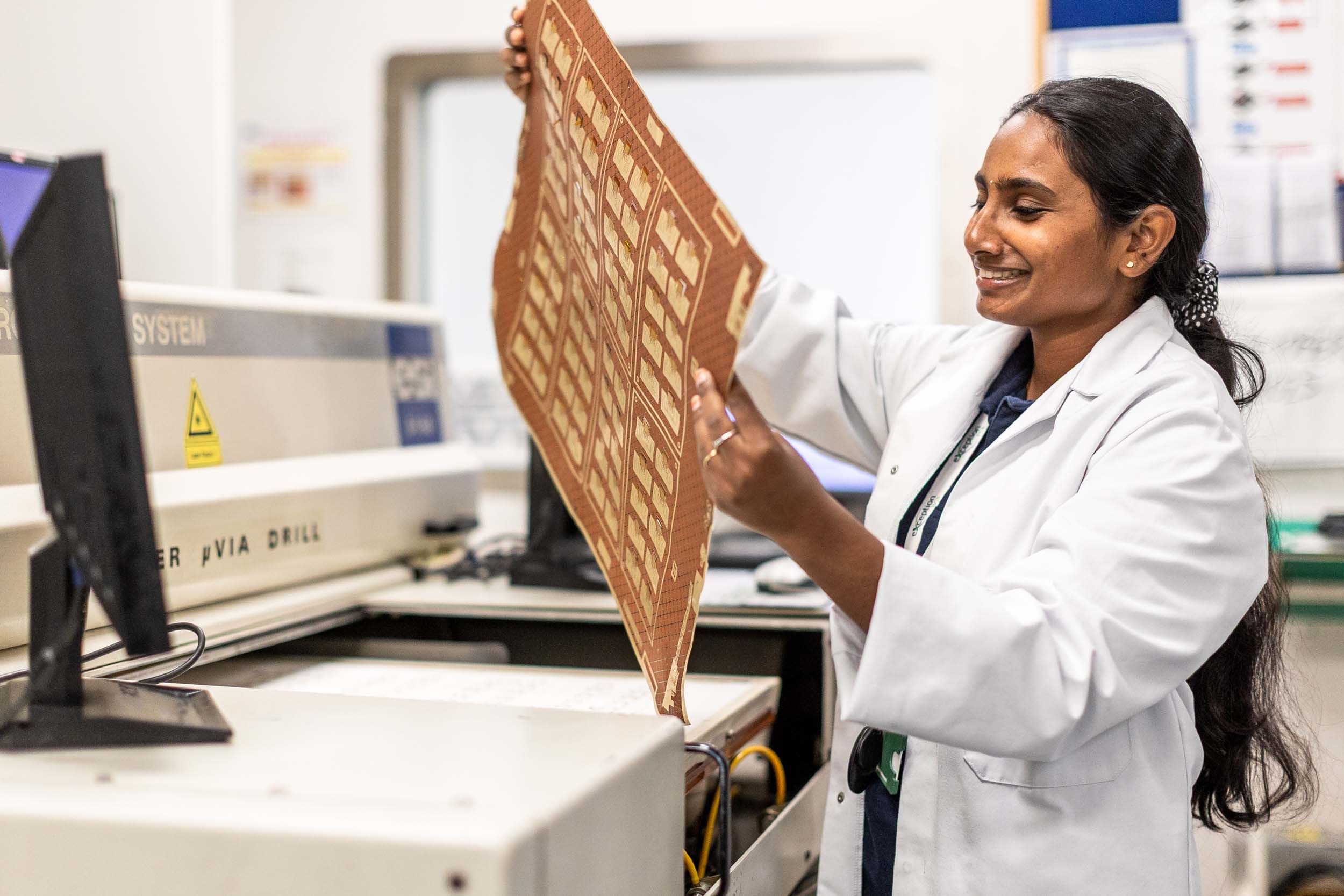
Design for Manufacture
Exception PCB provides engineering-led DFM review from an in-house team of ten engineers, identifying manufacturability risks and optimising designs before production begins. Available as an integrated or standalone service.
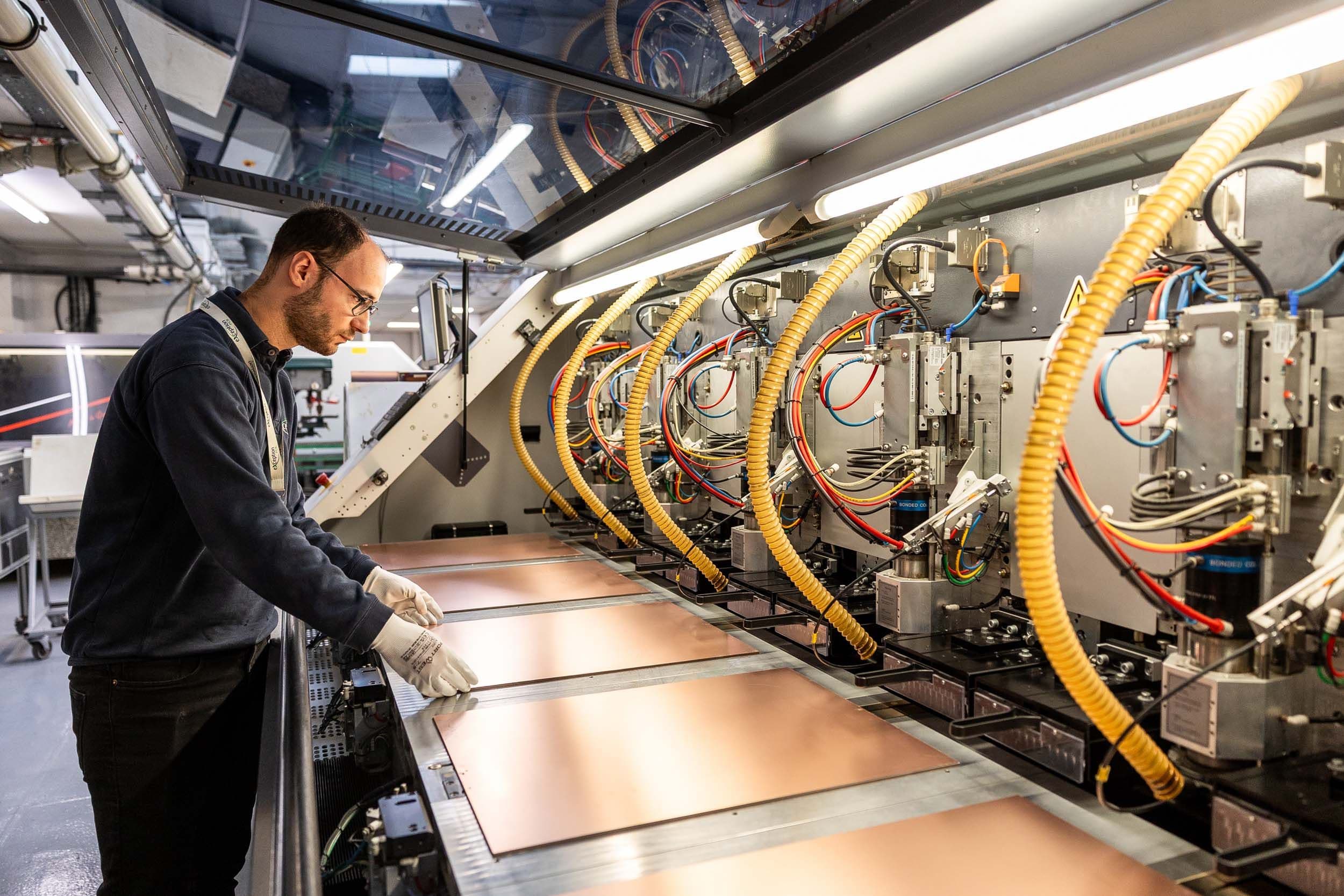
Quick-Turn PCBs
Exception PCB's quick-turn service delivers accelerated PCB manufacturing for time-critical prototype and production builds, with the same process control and quality discipline applied to every order.